
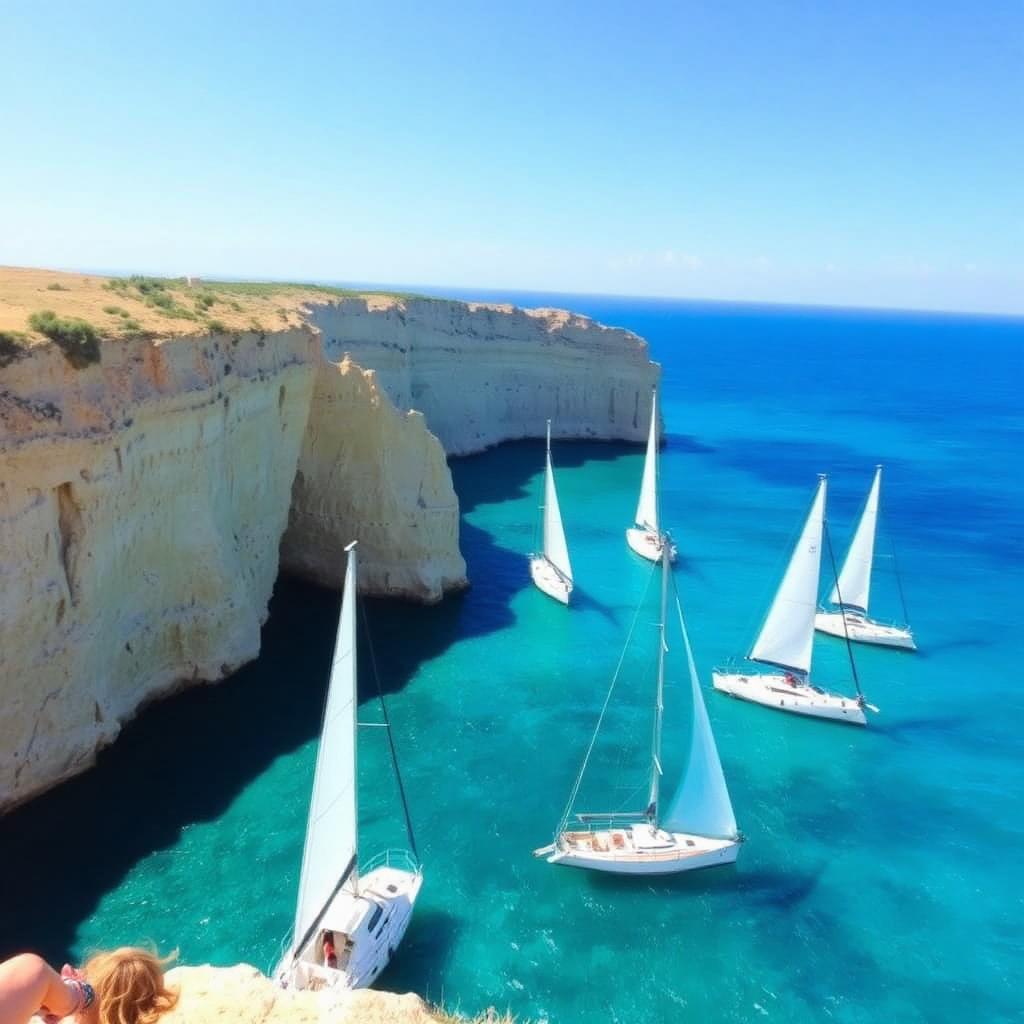
Scuba Diving on the Costa Blanca
Two of Spain's most important marine reserves, dozens of sites along a limestone coastline of caves and walls, and an established PADI infrastructure with English-speaking instructors — the Costa Blanca is one of the best places in mainland Spain to learn or progress as a diver. Here's where, when and how.
Two of Spain's most important marine reserves, dozens of sites along a limestone coastline of caves and walls, and an established PADI infrastructure with English-speaking instructors — the Costa Blanca is one of the best places in mainland Spain to learn or progress as a diver. Here's where, when and how.
Why dive the Costa Blanca
The Alicante coast offers an unusual combination: two formally protected marine reserves (Cabo de San Antonio between Dénia and Jávea, and Isla de Tabarca off Santa Pola) where fish populations have been rebuilding undisturbed since the 1980s, plus a limestone coastline that has produced spectacular cave, arch and wall dives. Water temperature runs from 14°C in February to 27°C in August; visibility averages 15–25 m and exceeds 30 m on the best summer days.
Dive centres are concentrated in Dénia, Jávea, Moraira, Calpe, Altea, Alicante, Santa Pola and Torrevieja. All are PADI or SSI affiliated; many also run TDI/SDI technical courses. Most offer instruction in English, German, French and Dutch as well as Spanish.
Top dive sites
| Site | Town | Depth | Highlight |
|---|---|---|---|
| Cabo de San Antonio | Dénia / Jávea | 10–35 m | Marine reserve walls, groupers, dentex |
| La Cova Tallada | Dénia | 6–18 m | Roman quarry cave, ceiling collapse, light beams |
| Los Arcos (Cova dels Arcs) | Benitachell | 10–25 m | Arched limestone caves |
| La Llosa | Calpe | 12–30 m | Seamount, schooling fish, the occasional sunfish |
| Isla de Portitxol | Jávea | 8–22 m | Walls, octopus, moray, dense reef |
| Tabarca Island | Santa Pola | 6–30 m | Spain's oldest marine reserve — fish density |
| Cova del Llop Marí | Calpe | 5–18 m | Sea cave (Mediterranean monk-seal cave) |
| El Descubridor | Jávea | 10–18 m | Reef pinnacle, sponges, nudibranchs |
What you'll see
- ✦Dusky grouper (the marine reserve flagship) — 1 m+ resident fish
- ✦Mediterranean barracuda — schools of 20–50
- ✦Octopus, common cuttlefish, moray eels
- ✦Salema, bream, dentex, sea bass, dorado
- ✦Posidonia seagrass meadows with pipefish, seahorses
- ✦Sunfish (Mola mola) — occasional summer visitors
- ✦Sponges, gorgonians, nudibranchs on the deeper walls
Cova Tallada (Dénia) and Cova dels Arcs (Benitachell) are some of the easiest accessible cave-system dives in the western Mediterranean. Both are guided-only and require basic cavern training or supervision by a dive centre; the swim-through experience is unmatched.
Courses and costs
| Course / dive | Duration | Typical cost |
|---|---|---|
| PADI Discover Scuba (try-dive) | Half day | €70–€95 |
| PADI Open Water (full certification) | 3–4 days | €380–€480 |
| PADI Advanced Open Water | 2 days | €280–€350 |
| PADI Rescue Diver | 3 days | €330–€420 |
| Single shore dive (with kit) | — | €45–€60 |
| Single boat dive (with kit) | — | €55–€80 |
| 6-dive package (with kit) | — | €280–€360 |
| Nitrox specialty | 1 day | €140–€180 |
Best season and conditions
May to November is the main diving season. June and September are the sweet spot — water around 22–24°C, light crowds, the best visibility. July and August see thermoclines around 15–18 m where the temperature drops sharply. Winter diving is excellent for cold-water specialists — 14–17°C, often the year's best visibility and almost empty dive sites.
- ✦Wetsuit: 5 mm year-round; 7 mm or semi-dry in winter
- ✦Booking ahead is essential for Tabarca and the marine reserves
- ✦All reputable centres carry oxygen, AED and run safety briefings
- ✦Marine reserve dive permits are arranged by the dive centre
- ✦Don't fly within 18–24 hours of your last dive
Related guides
Beaches
240 km of coastline, 80+ Blue Flag beaches.
Read guideHiking
Peñón de Ifach, Montgó, Sierra Bernia.
Read guideFood & wine
Paella, rice dishes and Alicante wine.
Read guideFamily
Theme parks, water parks, animals.
Read guideVillages
Most beautiful inland pueblos.
Read guideEvents
Fiestas calendar — month by month.
Read guideFrequently asked
Related guides
Need help moving to Spain?
Our local team helps with visas, NIE, healthcare, housing and more. One friendly point of contact for your whole relocation.